
India's built environment is at a crossroads. Buildings residential complexes, IT parks, hospitals, commercial towers account for roughly 37–39% of global carbon emissions, with a significant share coming from the operational phase alone [1]. As cities like Chennai, Bengaluru, Hyderabad, and Pune grow denser and hotter, the pressure on energy grids, water systems, and waste infrastructure is compounding every year.
In India, where the building stock is projected to double by 2050, the choices made today in design, materials, systems, and operations will define the country's decarbonisation trajectory for decades.
What is a Net-Zero Energy Building?
A Net Zero Energy Building produces as much energy as it consumes annually through efficiency improvements and renewable energy generation.
Modern sustainability approaches also consider:
These elements contribute to the development of high performance buildings.
Passive design strategies for high performance buildings
Passive design strategies work by adapting a building to its local climate, reducing the need for mechanical heating and cooling from the outset.
Strategies include Passive Cooling, Passive heating, and the use of natural ventilation to enhance and maintain comfortable indoor conditions without the need for energy, considering location orientation, thermal mass, shading, massing, material selection, insulation, and the positioning and penetration of solar radiation.
For Indian climate conditions, the following passive design strategies prove most effective:
For instance, the combination of Window to Wall Ratio and shading device optimizes daylight, reduce energy consumption and increase the aesthetics of buildings.
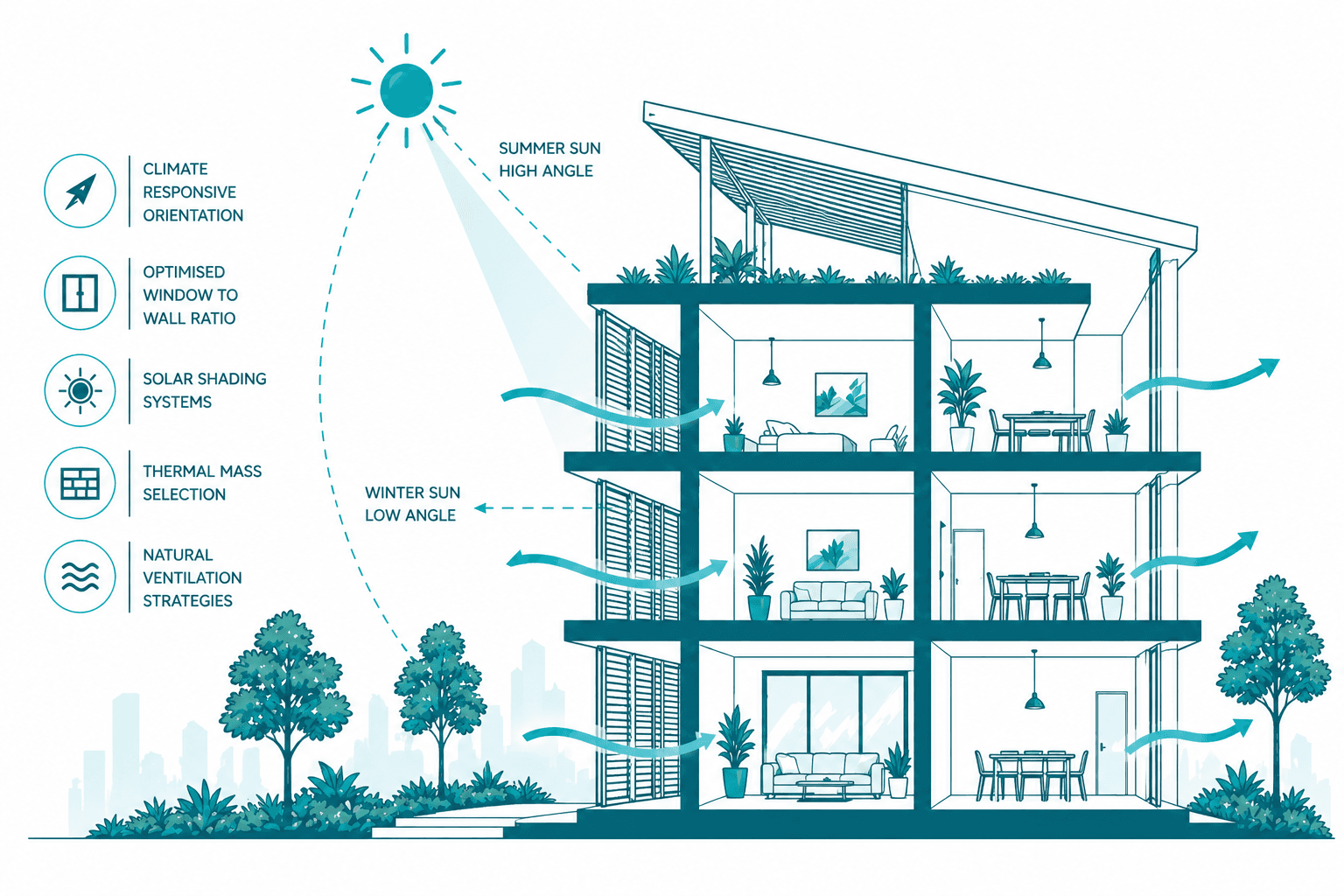
Research conducted in Greater Jakarta, a city climatically comparable to many Indian urban centres, demonstrates that passive design optimisation alone can substantially reduce energy demand in mid-income residential buildings toward net-zero targets [2].
Biomimicry-Inspired Design
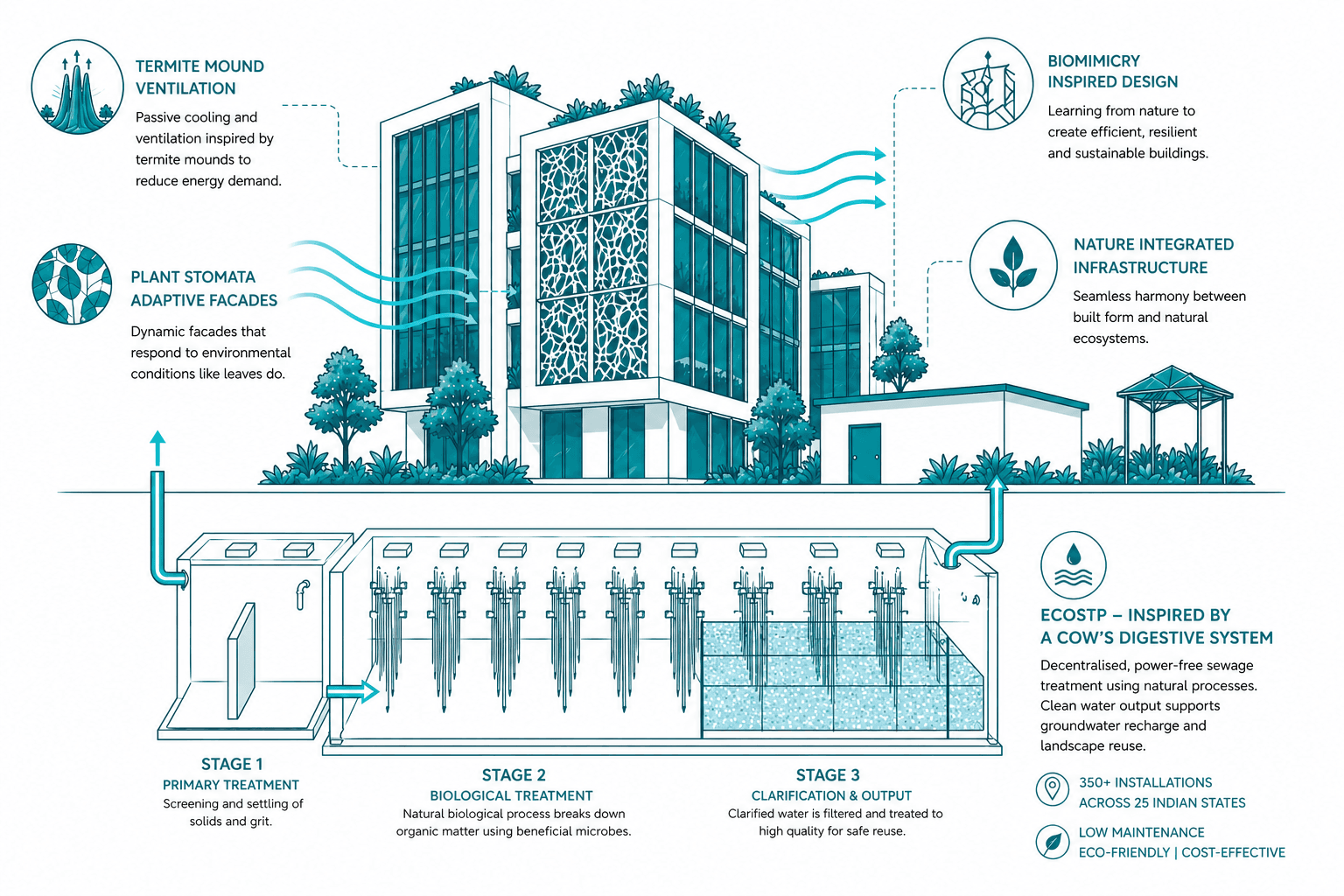
A more experimental but growing frontier is biomimicry - extracting strategies from biological systems and applying them to building design. Termite mound ventilation has inspired passive cooling systems. Plant stomata have informed adaptive facade designs that open and close in response to temperature and humidity [3]. While still niche in India, these approaches signal where high-performance architecture is heading.
A compelling real-world example of biomimicry in Indian sustainable infrastructure is ECOSTP - a net-zero sewage treatment technology that draws from the functional principles of a cow's digestive system. Their patented underground treatment chambers operate without power, chemicals, or human intervention, treating sewage in a decentralised and self-sustainable way. With over 350 installations across 25 Indian states, showing that biomimicry-driven solutions are not experimental concepts but proven infrastructure choices for Indian buildings.
High-performance building envelope
The building envelope forms the interface between indoor and outdoor environments. Its performance directly affects energy consumption, thermal comfort, and moisture control.
Modern high-performance buildings incorporate:
Advanced insulation materials
These materials reduce temperature fluctuations, improve moisture resistance, and contribute meaningfully to a building's energy balance.
Airtight construction methods
Airtight building assemblies minimise uncontrolled air infiltration through walls, joints, and openings one of the most common yet invisible sources of energy loss in Indian buildings.
Moisture-resistant structural layers
Dedicated moisture barriers within the building envelope protect structural integrity and prevent dampness, mould, and thermal degradation over the building's lifetime.
Adaptive facade technologies
Dynamic facade systems use sensors and smart materials to automatically modulate shading, ventilation, and solar gain — reducing HVAC load without compromising occupant comfort.
Smart glazing technologies can adjust transparency dynamically, reducing cooling loads while maintaining daylight access.
Building-integrated photovoltaic glass further allows building surfaces to generate electricity without altering architectural aesthetics.
Circular economy materials: A truly high-performance building envelope considers not just how materials perform, but where they come from and what they displace. Circular construction materials are made from recovered waste diverting it from landfill while reducing the embodied carbon of the building itself. Wricks by Angirus exemplifies this approach in the Indian context — bricks produced entirely from recycled plastic and construction & demolition waste, proven to be 30% lighter, 20% stronger, and 80% more waterproof than fired clay bricks.
Renewable energy integration in buildings
Renewable generation is a key component of net-zero performance.
Building-Integrated Photovoltaics (BIPV) enable solar panels to function as both structural elements and energy generators.
For Indian apartment complexes and commercial parks, BIPV on south-facing facades and car park canopies is increasingly economically viable, especially as panel costs continue to fall.
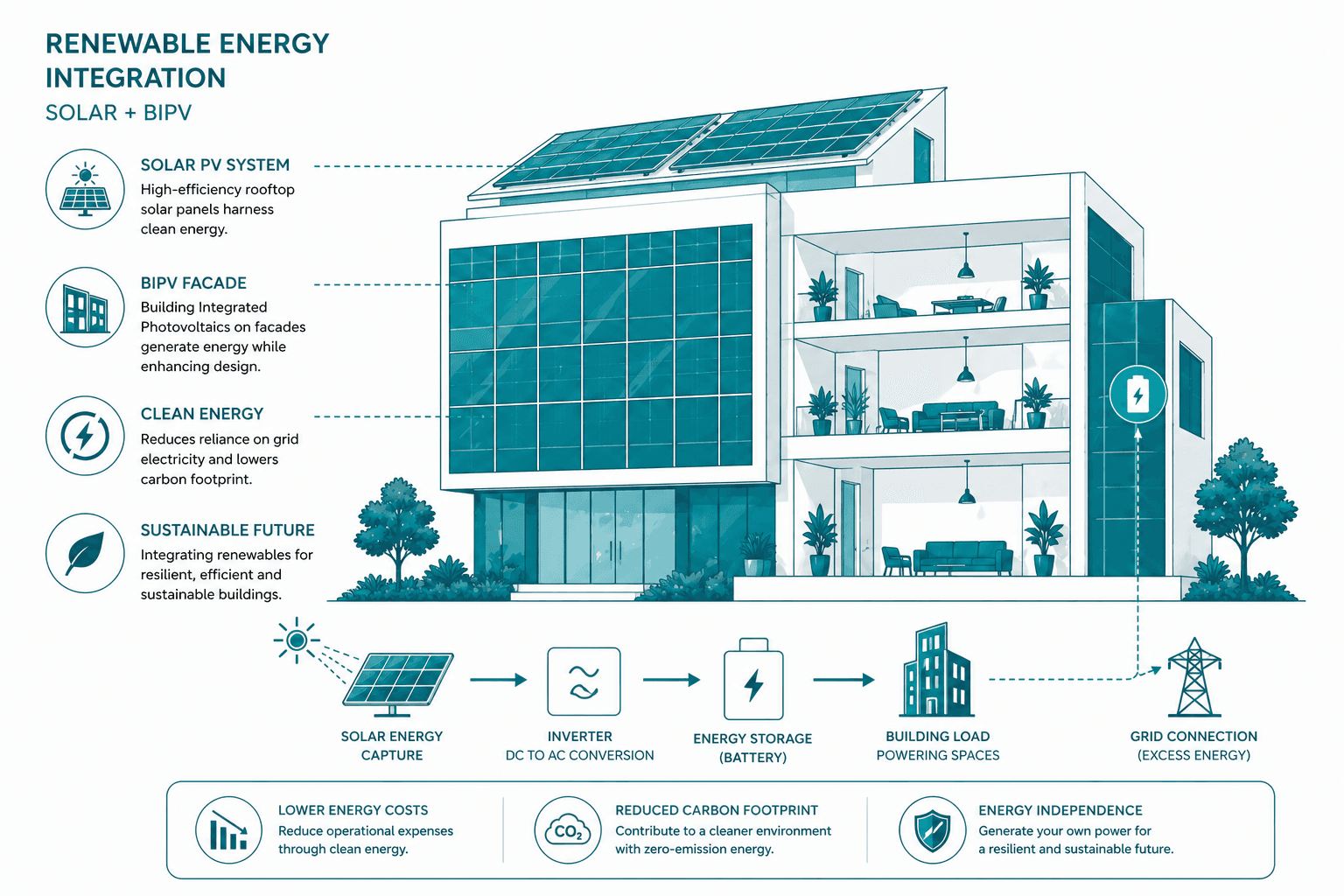
Rooftop Solar Panels: Rooftop solar remains the most widely adopted renewable energy solution in Indian residential and commercial buildings. Panels installed on flat or pitched rooftops directly offset grid electricity consumption, reducing both carbon emissions and electricity bills. In Indian residential communities rooftop solar systems are increasingly paired with net metering arrangements, allowing excess generation to be fed back to the grid making them one of the most accessible entry points into net-zero performance for existing buildings.
Geothermal Heating and Cooling: GSHP is designed to remove heat and humidity from the air by using Earth's constant temperature, roughly 50-60°F, as a sustainable alternative to conventional HVAC systems. This system is highly encouraged for buildings with greater access to good-quality well water, and the types vary by arena.
While more common in North India, where heating loads are significant, GSHPs are gaining traction in data centres, hospitals, and large commercial buildings across climate zones.
Why Net Zero Matters Now in India
India’s climate conditions and infrastructure challenges make efficient buildings increasingly necessary.
Drivers accelerating adoption of net zero buildings India include:
Rising cooling demand in urban environments
Indian cities are experiencing record temperatures year on year. As cooling loads increase, buildings that are designed to minimise heat gain and reduce HVAC dependence gain a direct operational cost advantage.
Increasing electricity tariffs
Commercial and residential electricity tariffs across Indian states have risen steadily over the past decade. Energy-efficient buildings with on-site generation are increasingly insulated from this cost volatility.
Water scarcity in major cities
Cities like Chennai, Bengaluru, and Hyderabad face acute water stress. Buildings with integrated water efficiency and recycling systems reduce dependence on municipal supply, a critical operational resilience factor.
ESG and sustainability reporting requirements
Corporate occupiers and institutional investors are increasingly required to report on the environmental performance of the assets they occupy or own. Green-certified, net-zero buildings directly support ESG compliance and disclosure obligations.
Investor focus on long-term asset performance
Sustainable buildings command higher valuations, lower vacancy rates, and stronger tenant retention. For developers and asset owners, net-zero performance is becoming a marker of long-term asset quality rather than a premium add-on.
Buildings designed with integrated performance strategies are better positioned to manage cost volatility and regulatory shifts.
Net-zero buildings represent a structured approach to resource efficiency rather than a single technology choice. Through integrated design, renewable energy adoption, and performance monitoring, buildings can significantly reduce environmental impact while improving operational outcomes.
For Indian developers and facility managers, the transition begins with measurement, followed by targeted improvements and continuous optimisation.
Image Disclaimer: All images used in this article are for illustrative and educational purposes only. They represent concepts, design approaches, and system relationships. Actual project designs, configurations, and performance outcomes may vary based on site conditions and implementation practices.
References
- International Energy Agency (2023). Buildings – Energy System.
- Chandra, B., Purwanto, L., & Muljadinata, A. (2024). Passive Design Strategies for Achieving Net Zero Energy Targets in Middle-Income Dwellings in Greater Jakarta. International Journal of Applied Engineering and Technology, 6(1), 1–6.
- Rahubadda, R. V. A. D., & Kulatunga, U. (2025). Development of a new definition for biomimicry in the field of net-zero construction. Construction Innovation, 1–31.